If you have spent any time on a production floor, you already know that the difference between a part that performs and one that fails often comes down to what happens before the mold closes. Additive integration is one of the most consequential decisions in plastic molding processes, and yet it is frequently treated as an afterthought.
That gap between intention and execution is where manufacturers lose efficiency, consistency, and margin. This post walks through practical techniques for getting additive integration right, from masterbatch selection to process timing to troubleshooting the issues that tend to show up at the worst possible moment.
Why Additive Integration Deserves More Attention in Plastic Molding Processes
Additives do not work in isolation. They interact with the base resin, the processing temperatures, the shear forces inside the barrel, and each other. A flame retardant that performs beautifully in a lab sample can behave unpredictably when it encounters a lubricant or a UV stabilizer at processing temperatures. These interactions are not hypothetical; they show up as surface defects, inconsistent color, reduced mechanical strength, or parts that fail quality checks at the end of the line.
Getting integration right means understanding not just what an additive does, but how it behaves inside your specific plastic molding process under your specific conditions.
Masterbatch vs. Liquid Concentrate vs. Dry Blending: Choosing the Right Carrier System
The delivery method matters as much as the additive itself. Here is a practical breakdown of the main options.
Masterbatch Concentrates
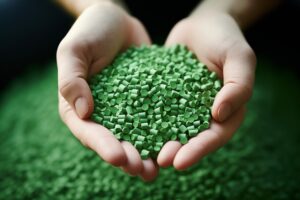
Masterbatches are the most widely used approach in injection molding and extrusion. The additive is pre-dispersed in a compatible carrier resin, which dramatically reduces dusting, improves let-down accuracy, and simplifies handling. For colorants, flame retardants, antistats, and UV stabilizers, masterbatch is typically the most reliable path to consistent dispersion.
The key variable to watch: carrier resin compatibility. A masterbatch built on a polyethylene carrier will not disperse cleanly into a polypropylene or nylon system without careful evaluation. Mismatched carriers are a common and avoidable source of streaking and delamination.
Liquid Additives
Liquid concentrates offer advantages in specific scenarios, particularly when you need rapid let-down ratio adjustments or when the additive chemistry resists solid-phase dispersion. They also eliminate the carrier resin compatibility concern. The tradeoffs are real, though: liquid metering equipment adds complexity to the line, and some additives are not stable in liquid form at elevated temperatures.
Dry Blending
Pre-blending powdered or pelletized additives directly with the base resin works well for some applications, but consistency is the challenge. Without controlled blending equipment and tight monitoring, separation can occur in the hopper, leading to part-to-part variation that is difficult to diagnose. For high-precision plastic molding processes, dry blending requires more process discipline than the other options.
Optimizing Dispersion in the Barrel and Screw
Even a well-formulated masterbatch can underperform if the screw design and processing parameters are not working in its favor. Dispersion quality depends on three things: thermal energy, shear energy, and residence time.
A few practical considerations for your plastic molding process:
- Back pressure is often underutilized as a dispersion tool. Increasing back pressure incrementally can significantly improve additive uniformity without major line changes.
- Screw speed affects shear intensity. Higher speeds generate more shear, which helps break down agglomerates in pigment or flame-retardant concentrates, but can degrade heat-sensitive additives like processing stabilizers if you push too far.
- Temperature profiles across the barrel should reflect the melt viscosity of your carrier resin, not just the base resin. A cooler feed zone and progressive heating toward the metering zone generally produce better dispersion for most masterbatch systems.
Small adjustments here can produce measurable improvements in part quality without requiring reformulation.
Feed Point and Timing: Where You Add the Additive Matters
In co-rotating twin-screw extrusion, the feed point for an additive can dramatically affect its performance. Heat-sensitive additives like antioxidants or optical brighteners often benefit from downstream feeding, after the resin has already melted and temperature peaks have passed. Feeding them at the throat means they are exposed to the full thermal history of the process, which can cause premature degradation.
For injection molding, timing looks different. The focus shifts to when in the shot cycle the additive-loaded melt reaches the cavity, and whether any stratification has occurred in the screw during recovery. Resting time between shots matters more than most molders realize, particularly for additives with lower melt viscosity than the base resin.
The Role of Process Aids in Smoother Molding Operations
Process aids often get lumped in with functional additives, but they deserve their own consideration. Fluoropolymer-based process aids, for example, reduce melt fracture in polyolefin extrusion and can extend the window between purges. In high-output plastic molding processes where uptime is everything, that matters.
Internal lubricants reduce polymer-to-polymer friction during melt flow, which can lower cycle times and improve surface quality. External lubricants reduce metal-to-polymer adhesion, which helps with demolding and reduces die buildup in extrusion. Using both types requires careful loading level management; too much external lubricant can cause plate-out on tooling and create more problems than it solves.
Common Integration Problems and What They Usually Mean
When additive integration goes wrong, the defect pattern usually points to the cause.
Streaking or Color Variation
This almost always points to poor dispersion. Check carrier resin compatibility first, then back pressure and screw speed. If those are dialed in and you are still seeing streaks, look at your let-down ratio and whether the masterbatch pellets are segregating in the hopper.
Loss of Physical Properties After Molding
If tensile strength, impact resistance, or elongation is below spec, and the base resin is not the variable, additive degradation is the likely culprit. Review your temperature profile and residence time. Antioxidants can be consumed during processing if temperatures are too high or cycle times are too long, leaving the finished part without the protection it needs.
Surface Defects or Plate-Out on Tooling
This tends to indicate lubricant overload or an incompatibility between the additive and the mold surface. Reduce the loading level of external lubricants incrementally and clean the tool thoroughly before drawing conclusions. It is also worth checking whether a different additive system might be compatible with your existing mold coatings.
Working with a Specialty Additive Supplier to Get It Right the First Time
Trial and error on the production floor is expensive. Working with a supplier that has in-house testing and formulation expertise changes the equation. Phoenix Plastics tests additives in real processing conditions and can help identify compatibility issues, optimal loading levels, and process parameters before you see problems in production.
That kind of application support is especially valuable when you are introducing a new additive into an existing plastic molding process, where the interactions with current materials are not always predictable on paper.
Getting More from Your Plastic Molding Process Starts with Smarter Integration
Additive integration is not a one-size-fits-all decision. The right carrier system, feed point, process parameters, and additive chemistry depend on your resin, your tooling, and what the finished part needs to do. Getting those variables aligned is what separates consistent, high-quality production from the kind of variability that eats margins and creates rework.
Phoenix Plastics has been helping manufacturers solve these challenges since 1996. If you are evaluating additives for a current or upcoming application, reach out to our team. Contact us, and we can work through the specifics with you.