
Choosing the right plastic manufacturing process can be a challenge. There are many options, and each has unique benefits and limitations to consider. Here is a brief look at the different types of plastic manufacturing.
The Key to Choosing a Plastic Manufacturing Process
The key to choosing the right plastic manufacturing process is to think about the following:
- What you need your finished plastic to do
- The limitations of each plastic manufacturing process
You need a process to make the plastic into what you want it to be without significant drawbacks. Thinking about these two factors will determine the best option every time.
Available Plastic Manufacturing Processes
Here are some of the most common plastic manufacturing processes:
Injection Molding
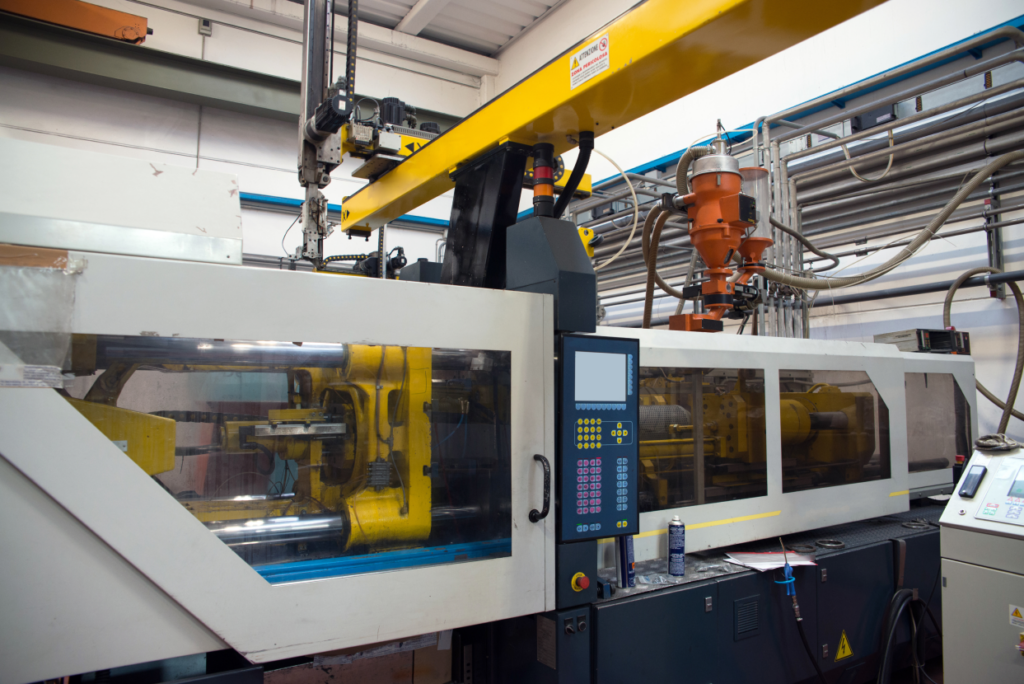
Injection molding heats the plastic resin and injects it into a mold made from a more rigid material like steel or ceramic. When the plastic cools, it hardens into that shape and can be removed from the mold. Parts get made this way quickly, but it works best for simple, solid parts, as complex parts take more work to produce.
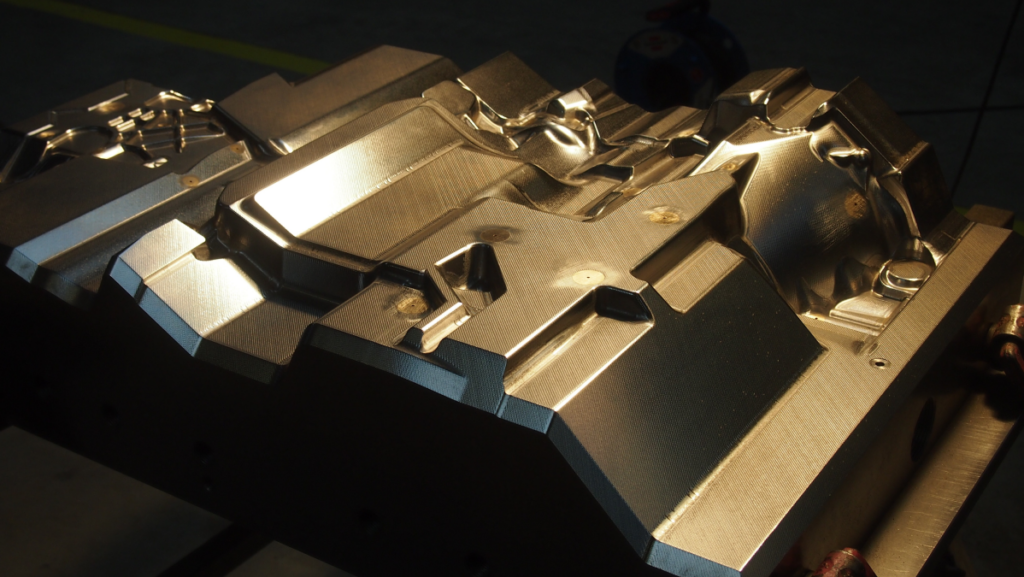
This process is one of the most widely used in plastic manufacturing for good reason. The molds themselves are expensive to produce upfront, but once they exist, the per-unit cost drops significantly at scale. That makes injection molding a strong fit for high-volume production runs. The tradeoff is flexibility; changing the design means changing the mold, which resets a good chunk of that upfront cost. It’s also worth noting that wall thickness matters here. Uneven walls can cause warping or sink marks as the plastic cools unevenly, so part design and mold engineering go hand in hand.
Blow Molding
Blow molding is the opposite of injection molding. The plastic is put in a mold and then inflated using compressed gas. This pushes the plastic to the sides of the mold, giving it shape, but the inside is hollow. This is great for hollow parts with solid walls.
You’ll find blow molding behind most of the bottles and containers you encounter daily — plastic jugs, shampoo bottles, fuel tanks. The process starts with a heated tube of plastic called a parison, which is clamped into the mold before the gas is introduced. One thing to keep in mind: because the plastic is being stretched outward by pressure rather than pushed into fine detail, blow molding doesn’t produce the same surface precision as injection molding. It trades fine detail for speed and the ability to create seamless hollow shapes in a single step.
Extrusion Molding
Extrusion molding is also used to make hollow parts, but it uses pump pressure to move the liquid plastic into place. The resin is liquified and pushed into a mold using a liquid pump. When cooled, it is removed from the mold and forms a solid, tube-like shape.
What separates extrusion from other molding methods is that it’s a continuous process. Rather than filling a closed mold and waiting, molten plastic is pushed through a shaped opening called a die, and the material comes out the other side in a consistent profile that gets cut to length. Pipes, window frames, wire insulation, and plastic tubing are all common extrusion products. The cross-section stays constant throughout the part’s length, which is what makes this method ideal for long, uniform components but less suited for anything with varying geometry.
Compression Molding
Compression molding places plastic in a mold and then squeezes the mold together. This compresses the plastic into the right shape, which is excellent for forming parts that are flat or have uniform sides. It can also make very dense parts.
The material used here is often a pre-measured charge — sometimes a sheet, sometimes a bulk compound — placed directly into an open mold cavity. Heat and pressure applied by a hydraulic press cause the material to flow and conform to the mold’s shape. Because there’s no injection or inflation involved, the process works particularly well with thermosetting plastics and composite materials that don’t respond well to other methods. Compression-molded parts tend to have good structural integrity and low residual stress, which is part of why this process is common in automotive components and electrical housings, where durability under load is non-negotiable.
Thermoforming
Thermoforming uses plastic sheets to shape parts with complex, open 3D shapes like masks. The sheet is placed over the mold and then heated. At the same time, the mold applies suction to the other side to pull the sheet down. When it reaches the right temperature, the sheet becomes flexible and is pulled down over the mold by the suction, forming a tight fit with the right shape.
This process is split into two categories depending on application: thin-gauge thermoforming, which handles disposable packaging like clamshell containers and trays, and heavy-gauge thermoforming, which produces thicker structural parts like vehicle door liners or medical equipment housings. The vacuum suction approach described above is the most common, but some applications use positive air pressure from above to push the sheet down instead, or a combination of both. Tooling costs are considerably lower than injection molding, which makes thermoforming a practical option for lower production volumes or larger parts where an injection mold would be prohibitively expensive.
Factors to Consider When Choosing a Plastic Manufacturing Process
There are several factors to consider when choosing a plastic manufacturing process. Here are the most common:
- Cost – How much does it cost to make per unit?
- Volume – How many units can you make per hour?
- Material – What materials are you working with? What are their limits?
- Part Size – How big is each part you need to make? Only some processes can work for different-sized parts.
- Precision – How precise and complex do you need the part to be? Some methods only make basic parts.
- Lead Time – How much time do you need to make parts before the deadline? Some methods take a long time to produce a large volume of parts.
Learn More About Plastic Manufacturing Processes from Phoenix Plastics
If you need help choosing the right plastic manufacturing process, reach out to the expert team at Phoenix Plastics. Contact us now to determine the best option and get a quote for your next project.